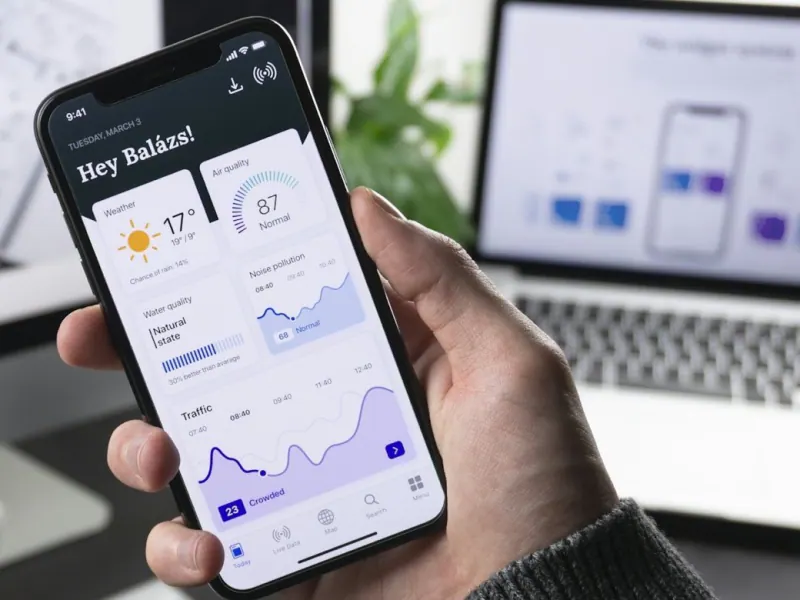
A CRM is the system where you log every prospect and customer, what stage of the buying process they're in and what the next step is. For a small business in Mexico, the CRM has to integrate with WhatsApp, be easy to use from a phone and have stages that reflect your real sales process. Start with a simple pipeline, connect your lead sources and automate the first contact; advanced features can wait.
- If your sales live in salespeople's personal WhatsApp chats, the book of business belongs to them, not the company.
- A useful CRM for Mexico integrates with the WhatsApp Business API, not just email.
- Start with five or six stages that describe how your customer buys.
- Anything that can't be logged from a phone in under 30 seconds won't get logged.
- Automating the first contact is usually the change with the biggest impact on sales.
- Track response time, conversion rate by stage and reason for loss.
What a CRM is and what problem it solves
CRM stands for Customer Relationship Management. In practice it's a database of prospects and customers with three things a notebook or a spreadsheet doesn't handle well: history (what was discussed, what was quoted), stage (where each person is in the buying process) and next step (who contacts them, when and why).
The problem it solves is very concrete. At many small and midsize businesses in Mexico, follow-up depends on the salesperson's memory and their personal WhatsApp. When that salesperson leaves, the book of business walks out with them. When they have 40 open conversations, they forget ten. And the owner doesn't know how many quotes are out there or why the lost ones were lost.
A CRM used well turns that information into a company asset. It doesn't make anyone sell, but it keeps sales from slipping away through neglect, which in our experience is where the most money leaks. Think of the customer who asked for a quote on a Friday, got no reply on Monday and had already bought elsewhere by Tuesday: that customer doesn't show up in any report, but the sale was lost.
Signs your business already needs a CRM
- You have more than two people selling or handling prospects.
- Leads come in through several channels: WhatsApp, Facebook, Instagram, web forms, phone calls, industry portals.
- It takes you hours to respond to a new lead, or you don't know how long it takes.
- You can't quickly say how many quotes are open and for how much.
- You run Meta or Google campaigns and don't know which ones ended in a sale.
- A salesperson quit and you didn't know who they were following up with.
If two or more sound familiar, a CRM already pays for itself. If you sell low volume with a very personal touch, a well-organized spreadsheet may be enough; if that's you, read the guide to custom software vs. Excel first.
Features that matter in Mexico
Almost every CRM has contacts, a pipeline and tasks. What separates a useful one in Mexico from one that gets abandoned is this:
- Truly integrated WhatsApp. WhatsApp Business API conversations should land on the contact's record, several people should be able to handle the same number, and you should be able to send approved templates. In Mexico, WhatsApp is the default way customers talk to businesses. If you're not sure how the app differs from the API, start with our guide to WhatsApp Business app vs. API.
- Comfortable mobile use. Your salespeople are out on the street, on job sites or on the sales floor.
- Automatic lead capture from web forms, Meta Lead Ads and portals, with no copying and pasting.
- Fields in Spanish and tailored to you: type of financing, location, city, how they heard about you.
- Payment and invoicing integrations: Mercado Pago or Stripe payment links, and a connection to your CFDI invoicing system (Mexico's mandatory electronic invoice).
- Role-based permissions so each salesperson sees their own accounts and management sees everything.
- Data export at any time. Your customer base belongs to you.
CRM options for a small business
There's no "best" CRM in the abstract; it depends on how you sell. These are the families we see most often in Mexico:
| Type | Examples | Good for | Watch out for |
|---|---|---|---|
| General-purpose CRM | HubSpot, Zoho CRM, Pipedrive | B2B sales, email, reporting, broad integrations | WhatsApp usually requires connectors; cost grows per user |
| Messaging-first CRM | Kommo, GoHighLevel, Bitrix24 | Selling over WhatsApp and Instagram, automated funnels | Setup learning curve; shallower reporting in some |
| ERP with a CRM module | Odoo and similar | Companies that also want inventory and invoicing in one system | Longer implementation |
| Custom CRM | In-house build on Supabase or similar | Very specific processes or integration with existing systems | Requires a vendor to maintain it |
We work mostly with HubSpot and GoHighLevel, and with custom builds when the process calls for it. For multi-agent WhatsApp support, MonkeyChat works as a shared inbox with an AI assistant and connects to whatever CRM you already use.
How to design your sales pipeline
The pipeline is the list of stages a prospect moves through. The most common mistake is copying one from a generic template. The stages should describe what the customer does, not what the salesperson feels.
Here's an example for a solar panel installer in Torreón:
- New: the lead came in and nobody has contacted them yet.
- Contacted: they replied to the first message.
- Site visit scheduled: there's a date to survey their home or business.
- Quoted: they received a proposal with a price.
- Negotiation: they asked for changes or are comparing options.
- Won or lost: with a required reason if it was lost.
Five to seven stages are enough. Each one should have a clear criterion for moving to the next and an automatic task attached, for example a reminder if a lead has sat in "Quoted" for three days with no activity. If you want to see how this connects to your ads and your website, read the guide to the digital sales funnel.
The automations that pay off most
A CRM without automation is an expensive notebook. These five rules usually have the biggest impact:
- Instant reply to new leads on WhatsApp with useful information and a booking link.
- Automatic assignment by shift or by territory to the available salesperson.
- Appointment reminders 24 hours and 2 hours ahead, with the location.
- Follow-up on unanswered quotes at 3, 7 and 14 days.
- Weekly report to management with leads by source, response times and sales.
That's exactly what we did with Grupo Cimarra Desarrollos: first contact went from more than six hours to 47 seconds, and booked appointments rose 58%. The logic was built with n8n and WhatsApp; we explain it step by step in the guide to lead follow-up with n8n and WhatsApp. To estimate how many hours it would save you, use the automation calculator.
Rollout in four weeks
- Week 1: process. Map how you sell today, stages, fields and rules. Clean up the current contact database.
- Week 2: setup. Pipeline, fields, permissions, WhatsApp and form connections.
- Week 3: automations and pilot. Two salespeople use it with real leads; whatever gets in the way is adjusted.
- Week 4: the whole team. Training with real cases and one simple rule: if it's not in the CRM, it doesn't exist.
The factor that determines success is adoption. It helps a lot when the owner or manager reviews the pipeline in the weekly meeting: if leadership looks at it, the team fills it in. If you'd like us to implement it with you, see our automation service.
What to measure to know whether the CRM is working
After three months you should be able to answer these questions with data, not gut feeling. If you can't, something in the rollout went wrong:
| Metric | What it tells you | What to do if it looks bad |
|---|---|---|
| Time to first contact | How fast you respond to a new lead | Automate the first reply and the assignment |
| Conversion by stage | Which step loses the most prospects | Review the message, offer or follow-up at that stage |
| Reason for loss | Price, delivery time, competition, never replied | Adjust the offer or re-engage with targeted campaigns |
| Sales by source | Which channel brings customers, not just clicks | Shift ad budget toward what sells |
| Quotes with no follow-up | Team discipline | Automatic tasks and a review in the weekly meeting |
For the sales-by-source metric to be reliable, your ads and links need campaign parameters; we explain how in the guide to UTM parameters for measuring campaigns. With these five numbers, the sales meeting stops being a to-do list and becomes a conversation about where to adjust.
Personal data and your CRM
A CRM holds your customers' names, phone numbers and sometimes financial details. In Mexico, that comes with obligations under the Federal Law on the Protection of Personal Data Held by Private Parties, overhauled in 2025: having a privacy notice, using the data only for the purposes you disclosed and responding to access or deletion requests. If you also sell to customers in the US or Canada, the privacy rules of those markets apply too.
- Turn on two-step verification for every CRM user.
- Remove salespeople's access the same day they leave the company.
- Review which integrations have access to your contacts.
- Export a backup of your database regularly.
More detail in the guide to basic cybersecurity for small businesses.