23 locations, 7 cities and a website that builds itself
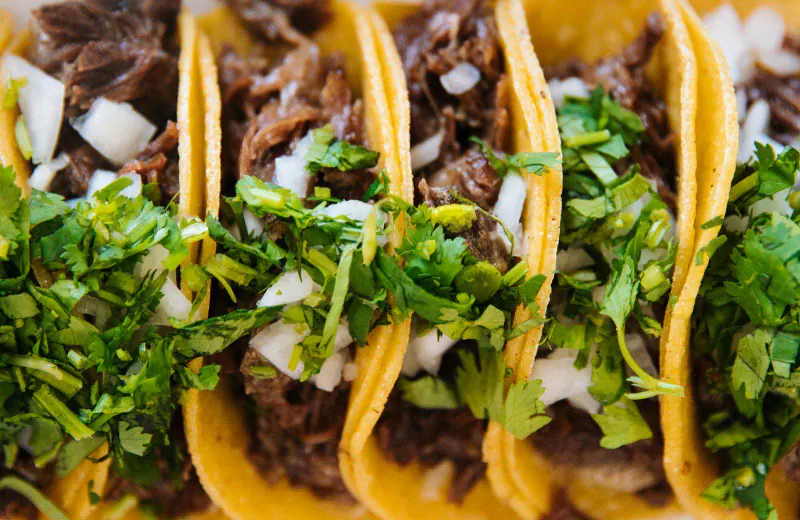
La Brasa Norteña has 23 locations between northern Mexico and the American Southwest, but its website was Spanish-only and had no page for each city. We built a 40-page bilingual site that is generated from a single data file.
- Industry
- Restaurants
- Location
- Torreón, Coahuila
- Year
- 2024
- Timeline
- 10 weeks
- Services
- Web development, SEO, AI search optimization (GEO)
For La Brasa Norteña, a charcoal-grill taco chain with locations in Torreón, Monterrey, Chihuahua, Ciudad Juárez, El Paso, Phoenix and Albuquerque, we developed a 40-page bilingual static website generated from data, with 11 city pages, a menu, a catering quote form and a careers page. Catering quote requests rose 71% and organic traffic to location pages grew 2.3×.
Where they started
The chain started in Torreón as a single spot selling charcoal-grilled skirt steak tacos and now runs 23 locations in seven cities across two countries. Every time a location opened, someone in IT added the address by hand to a slow WordPress site that was Spanish-only, with hours nobody kept up to date.
In El Paso, Phoenix and Albuquerque a large share of customers search in English, and the site didn't show up. Catering, a high-margin line, was quoted over the phone by each manager, and the careers page was a generic inbox flooded with applications that listed no city or position.
What we built
We replaced WordPress with a static website generated from a data file holding cities, locations, hours, phone numbers and the menu. Adding a location means adding one record: the generator creates its page in Spanish and English and adds it to its city page, the map and the sitemap.
We built 11 city pages (seven with locations and four catering delivery areas) with their own content: locations, the most-ordered dishes there, parking and extended hours. Every location carries Restaurant schema with hours and coordinates, and every page has its hreflang pair in the other language. That's how we handled local SEO in two countries.
The catering form asks for date, headcount, city and type of event, and goes to that city's manager with a copy to headquarters. The careers page filters by city and position. The menu lives in a single file, with notes on which dishes are only available in Mexico or only in the United States.
- 40-page bilingual static website
- Page generator driven by a data file
- 11 city pages with original content
- Pages for 23 locations with Restaurant schema
- Bilingual menu with country-specific variations
- Catering quote form routed by city
- Careers page filtered by city and position
- hreflang tags and a sitemap per language
How it came together
- 01
Discovery
Inventory of locations, actual hours and city-level searches in both languages.
Weeks 1–2 - 02
Data and architecture
Master file of locations and menu, plus a 40-page site map.
Weeks 3–4 - 03
Design and generator
Templates, static generator and a translation reviewed by native speakers.
Weeks 5–7 - 04
Forms and SEO
Catering, careers, schema, hreflang and redirects.
Weeks 8–9 - 05
Launch
Go-live, Search Console in both languages and training for the IT team.
Week 10
The numbers
Four months after launch, location pages get 4,920 organic visits a month, up from 2,140, and the English pages already bring 38% of that traffic in El Paso, Phoenix and Albuquerque. Catering quote requests went from 24 to 41 a month.
Adding a location to the website now takes ten minutes and doesn't depend on any outside vendor. The careers page receives 96 applications a month, already sorted by city and position, which saved HR from wading through emails with no context.
“We opened two locations after launch and added them ourselves in one afternoon. Catering orders in Phoenix started coming in through the English site, which never used to happen.”
Questions about this project
How do you build a website for a restaurant chain with many locations?
Is an English version worth it if I have locations in the United States?
Does a static website work for a restaurant that changes its menu and hours?
More case studies
Hanabi Ramen & Sushi

Cardiología Integral Nazas

Corte & Acabado Industrial
Does your business need something similar?
Tell us where you are today and we'll tell you what we'd build, how long it would take and how we'd measure it.
We reply within one business day.