Hanabi went from a paper notebook to a fully digital restaurant
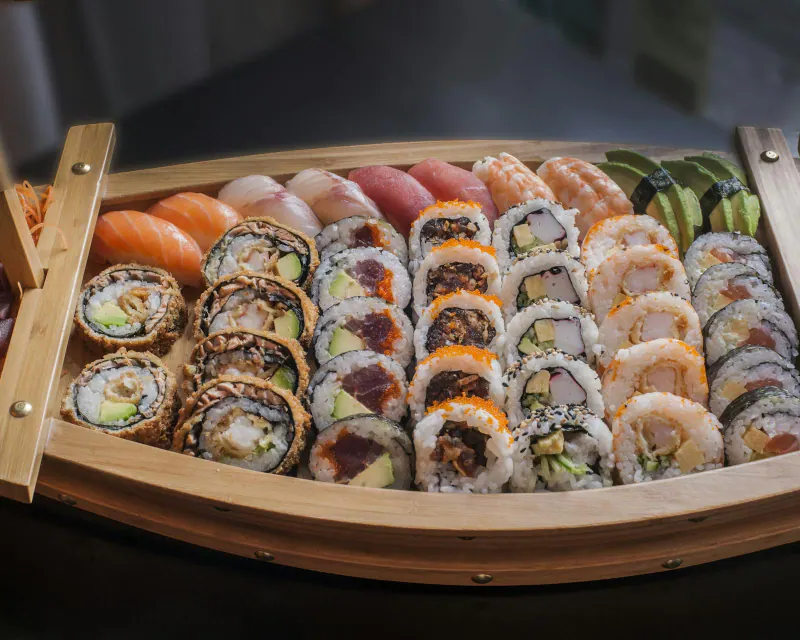
Hanabi Ramen & Sushi took orders in a notebook, balanced the register by adding up tickets by hand and tracked staff attendance on signed sheets. In 13 weeks we built its brand, a website with a QR menu, WhatsApp ordering, a point-of-sale system and a custom fingerprint time clock.
- Industry
- Restaurants
- Location
- Gómez Palacio, Durango
- Year
- 2025
- Timeline
- 13 weeks
- Services
- Web development, Branding & design, Custom software
For Hanabi Ramen & Sushi in Gómez Palacio, Durango, we built a website with a digital QR-code menu, WhatsApp ordering, a guest satisfaction survey, brand guidelines, a custom point-of-sale system and a fingerprint-based staff time clock. Within six months WhatsApp orders grew 184% and closing out the register dropped from 48 to 17 minutes.
Where they started
Hanabi opened in 2021 with eight tables and a sushi bar. By 2024 it had 22 tables, delivery and 14 people on payroll, but it still ran the way it did on day one: the menu was a PDF sent over Messenger, orders were written in a notebook next to the register and every night someone added up tickets by hand to balance the till.
Staff attendance was another leak. Signed sheets invited "I'll clock you in" favors, late arrivals didn't surface until payday and the owner spent almost a full day each month entering hours. They also had no way to hear from guests beyond Google reviews, which mostly showed up when something went wrong.
What we built
We started with the brand: a cleaned-up logo, color palette, typefaces, food photography and a 34-page brand guidelines book so menus, bags and social posts all looked consistent. On that foundation we built a static website with the full menu, a photo of every dish, filters (spicy, vegetarian, gluten-free) and a QR code on every table that opens the menu right on the guest's phone.
Delivery orders are built inside the same menu: the customer adds dishes and the "Order on WhatsApp" button opens a chat with the order, address and payment method already filled in. After the meal, a second QR code printed on the receipt leads to a five-question survey that feeds a weekly dashboard for the owner.
For operations we built custom software: a point-of-sale system in PHP 8 and MySQL with kitchen tickets, split checks and automatic register closeout, plus an Electron time-clock app that talks to the fingerprint reader through a C# bridge. Every clock-in and clock-out lands in the same database payroll uses.
- 34-page brand guidelines
- Website with an 86-dish digital menu and filters
- QR codes for every table and receipt
- WhatsApp delivery orders with a prefilled message
- Guest survey page with a weekly dashboard
- Point of sale with kitchen tickets and register closeout
- Fingerprint time clock
- Late-arrival and hours report for payroll
- Training for cashiers and floor staff
How it came together
- 01
Discovery and brand
Interviews with the owner and manager, a walkthrough during a full service and the brand guidelines.
Weeks 1–3 - 02
Website and menu
Digital menu with 86 dishes, table QR codes, WhatsApp ordering and the survey.
Weeks 4–6 - 03
Point of sale
Tables, kitchen tickets, split checks, basic inventory and register closeout.
Weeks 7–10 - 04
Fingerprint time clock
Desktop app, enrollment of 14 fingerprints and a payroll report.
Weeks 11–12 - 05
Go-live
Two shifts on the floor with the team and adjustments with staff.
Week 13
The numbers
Six months after launch, Hanabi averages 406 WhatsApp orders a month, up from 143 before the project. Because every message arrives complete, nobody has to ask for the address or repeat the order, and kitchen mistakes from badly written tickets have all but disappeared.
Register closeout went from 48 to 17 minutes, and payroll is built from the time-clock report with no sheets and no arguments. The survey has collected 612 responses with an average rating of 4.6; it showed that weekend wait times were the top complaint, so they opened a second sushi-bar line on Saturdays.
“I used to close the register at one in the morning adding up tickets. Now I click closeout and go home. The time clock also ended a lot of payroll arguments.”
Questions about this project
How long does it take to digitize a restaurant with a QR menu, ordering and a POS?
Is it better to take orders on WhatsApp instead of a delivery app?
Can a fingerprint reader connect to custom-built software?
More case studies

Cardiología Integral Nazas
La Brasa Norteña Taquería

Corte & Acabado Industrial
Does your business need something similar?
Tell us where you are today and we'll tell you what we'd build, how long it would take and how we'd measure it.
We reply within one business day.